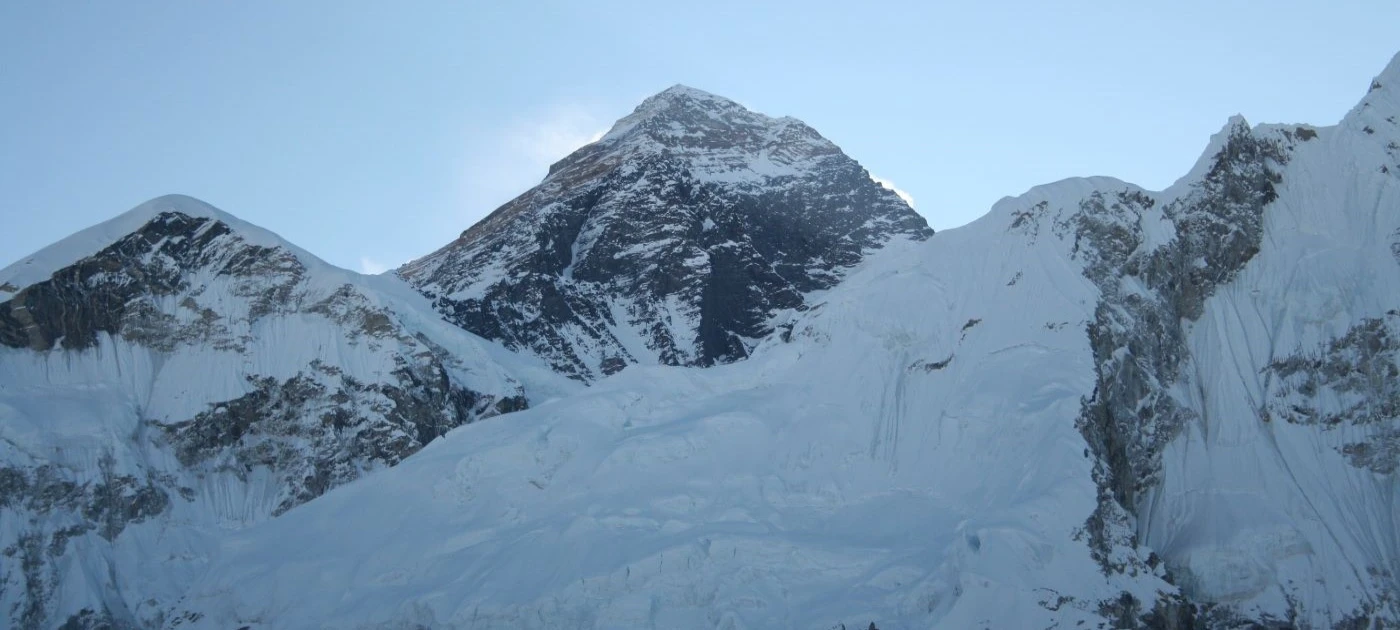
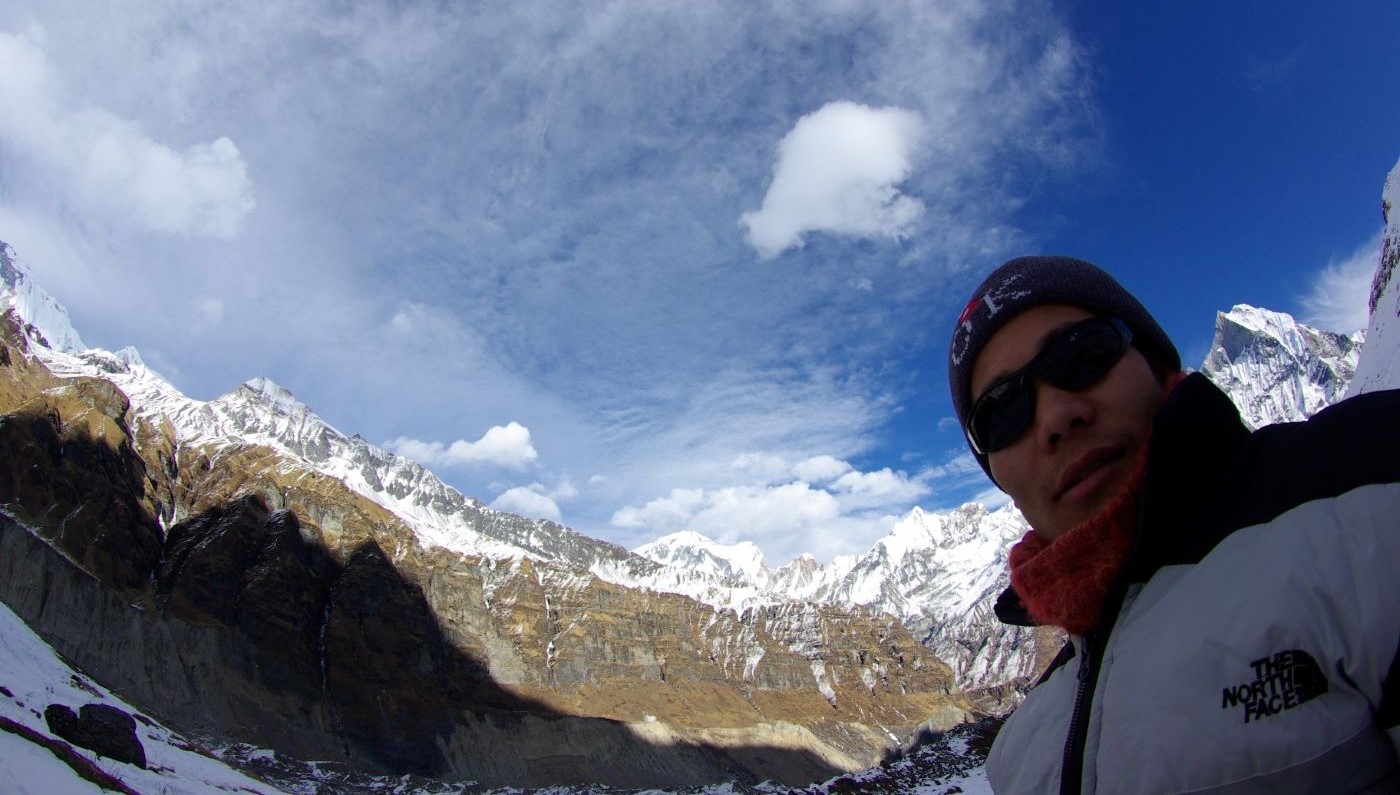
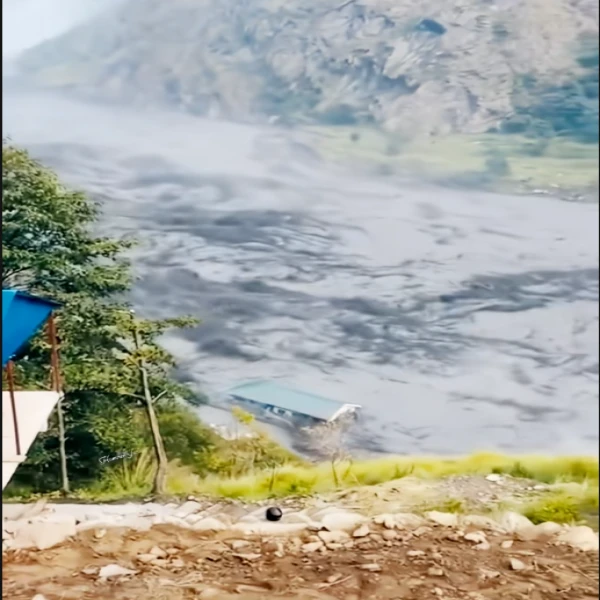
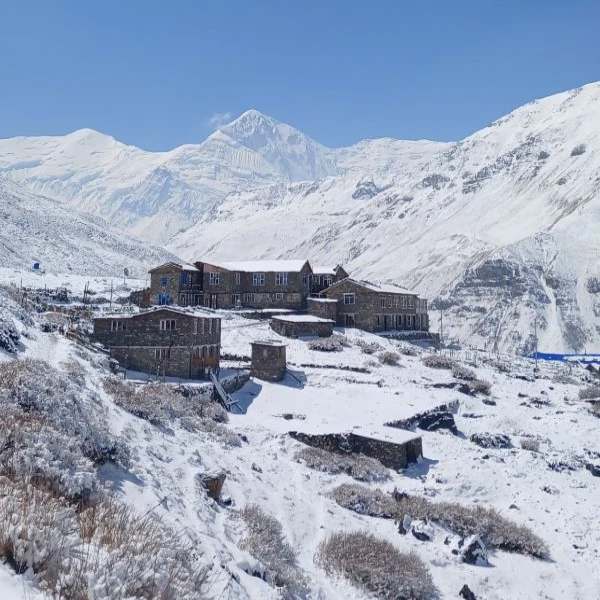
Every season, someone walks into our Thamel office holding two photos on their phone. One shows prayer flags and the dark pyramid of Everest. The other shows a ring of snow peaks glowing at sunrise.
Then comes the question we hear more than any other: Which one should I choose between Everest Base Camp Trek and Annapurna Base Camp Trek? It is a common question. Everest Base Camp Trek vs Annapurna Base Camp Trek is not a contest with one clear winner. Both are real Himalayan treks, and both end at a base camp, but they ask very different things.
At Higher Limits Trek & Expedition, we have guided guests on both routes for more than 17 years. They have come from France, Australia, Japan, Germany and beyond. Some had never trekked before, whereas some had walked half the world.
This guide gives you our honest answer, and we will not sugarcoat the hard parts. You will see seven differences that really decide the choice: altitude, difficulty, time, access, scenery, season and comfort. Then a simple decision guide matches each trek to the person you are.
Maybe your heart says the Everest Base Camp Trek. Maybe it says the Annapurna Base Camp Trek. Either way, you will know by the end of this Everest Base Camp Trek vs Annapurna Base Camp Trek comparison.
Everest Base Camp Trek vs Annapurna Base Camp Trek: The Short Answer
Everest Base Camp Trek is the higher, longer and harder trek, with Sherpa culture and the world's highest mountain. Annapurna Base Camp Trek is shorter, lower and greener, with a dramatic ring of peaks. For most first-time Himalayan trekkers with limited time, Annapurna is the easier fit.
In the Everest Base Camp vs Annapurna Base Camp debate, time off work and comfort with altitude usually settle it.
Choose Everest if:
Seeing Everest is the dream that brought you to Nepal.
You have enough time for a longer journey with rest days.
You are happy to sleep above 5,000 metres.
Choose Annapurna if:
You want a big Himalayan view with less time off work.
You prefer forests, villages and hot springs to barren glacier terrain.
You want a lower altitude and a gentler start to trekking.
EBC vs ABC at a Glance
This table puts the Everest Base Camp Trek vs Annapurna Base Camp Trek basics side by side. The seven differences below explain each row in depth:
Feature
Everest Base Camp (EBC)
Annapurna Base Camp (ABC)
Highest point
5,364m base camp; 5,545m Kala Patthar
4,130m
Highest overnight stay
Gorak Shep, 5,164m
Annapurna Base Camp, 4,130m
Our itinerary
16 days
11 days
Built-in rest days
2
None
Trek starts with
Flight to Lukla
Jeep from Pokhara
Local people
Sherpa
Gurung
Best seasons
March–May, September–November
March–May, September–November
Group size
1–12
1–12
Difference 1: Altitude
Altitude is the biggest gap between these two treks. In any Everest Base Camp Trek vs Annapurna Base Camp Trek decision, it is the first number to compare. Everything else follows from it.
How high are Everest Base Camp and Annapurna Base Camp?
Everest Base Camp is at 5,364 metreson the Khumbu Glacier. Most trekkers also climb Kala Patthar at 5,545 metres for the best summit view. Annapurna Base Camp is at 4,130 metres inside a natural amphitheatre.
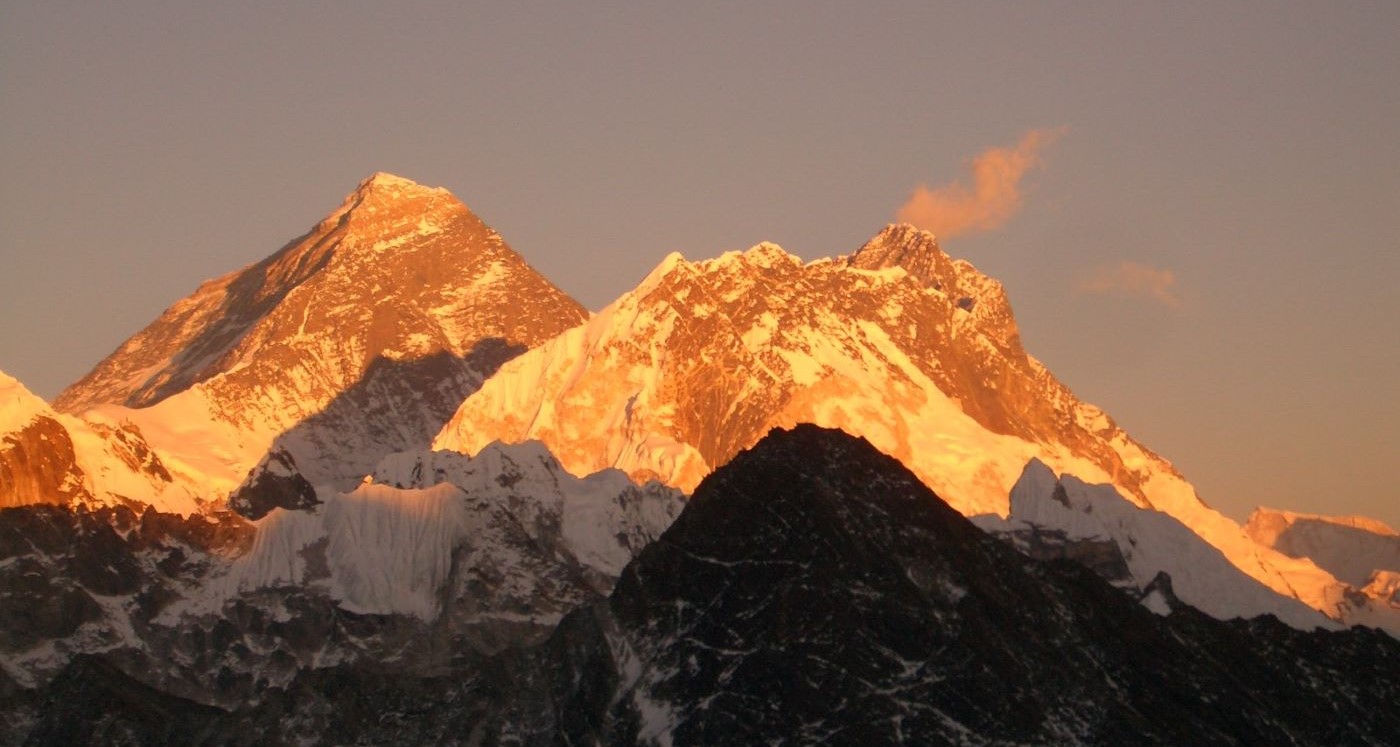
Sunset view from Kala Patthar
That makes a gap of 1,234 metres between the two base camps. Compare Kala Patthar with Annapurna Base Camp and the gap grows to 1,415 metres. On the Everest route, you also sleep high, at Gorak Shep (5,164m). There are no lodges at the base camp itself.
Why does the extra height change how you feel?
At Gorak Shep, each breath carries about half the oxygen it does at sea level. Even very fit trekkers get headaches and broken sleep up there. Fitness does not protect you from altitude, slow pacing does.
That is why our Everest itinerary has two rest days, at Namche Bazaar and Dingboche. Your guide also checks your oxygen saturation and pulse with an oximeter every evening. Small problems get fixed early, not late.
Annapurna Base Camp is lower, but 4,130 metres is still high. The itinerary has no rest day, so a steady pace and plenty of water matter. For symptoms and prevention, read our guide to preventing altitude sickness on the Everest Base Camp trek.
Difference 2: Which Is Harder, Everest Base Camp or Annapurna Base Camp?
The honest answer is that Everest is harder overall but Annapurna has its own difficulties, and many people underestimate it.
When guests ask us about Everest Base Camp Trek vs Annapurna Base Camp Trek difficulty, we split the answer in two. Everest is harder on your lungs and your patience. Annapurna is harder on your knees and thighs per hour of walking.
Why Everest is harder overall?
Nothing on the Everest trail is technical. You need no ropes, no ice axes and no climbing skills. What makes it tough is the length of the effort. You spend about 11 days on the mountain and cover roughly 120–130 km from Lukla back to Lukla.
Day 10 is the one that tests people. You walk six to eight hours along the Khumbu Glacier, reach base camp, then return to Gorak Shep. The air is cold, so starting early and going slowly is the whole strategy.
Why Annapurna is not "easy"?
Annapurna Base Camp is a moderate trek, but it is steep in places. The trail climbs and drops many times on stone steps, especially around Chhomrong and beyond, so your knees will notice.
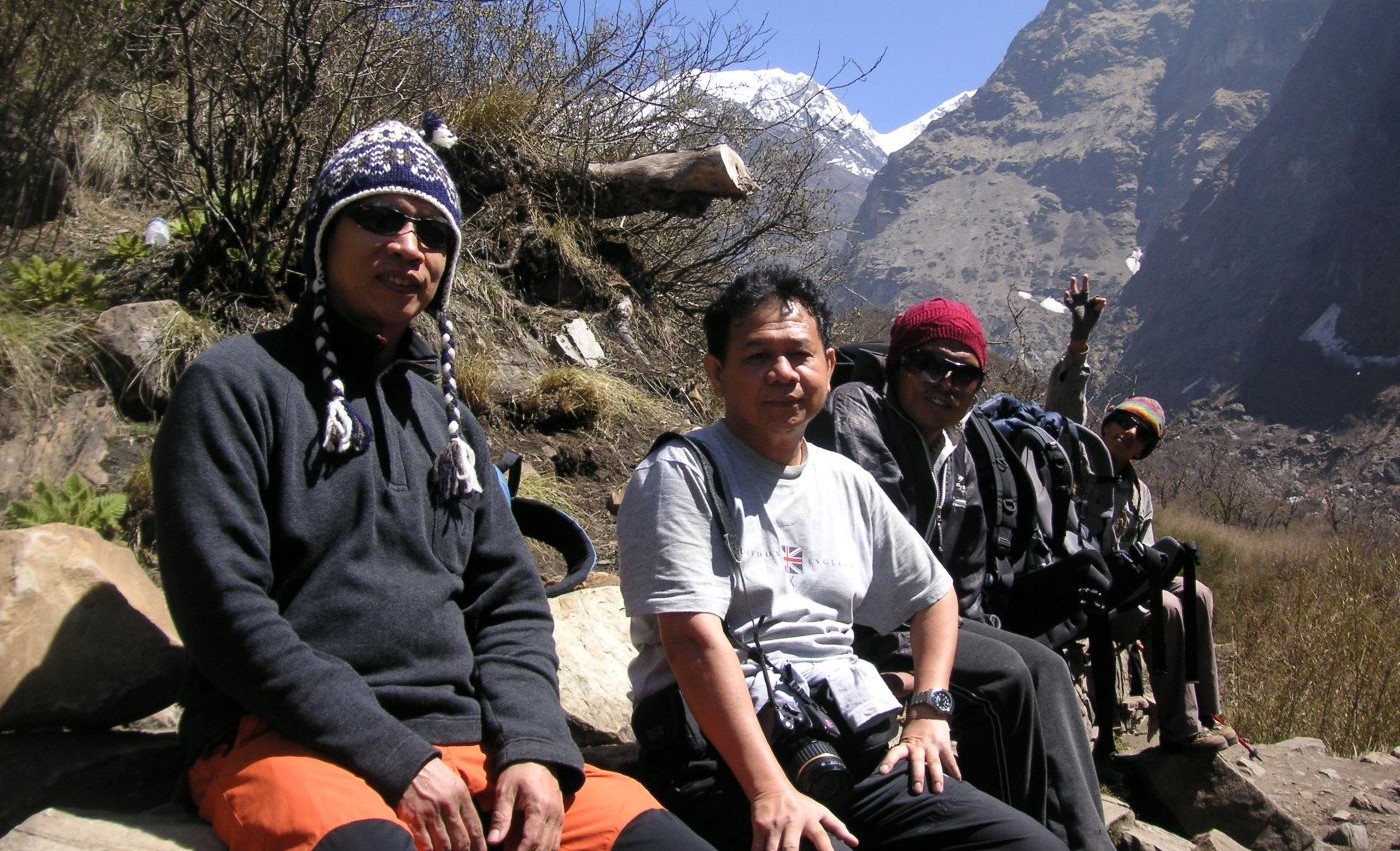
Our happy clients around chhomrong, Heading to ABC
The long return from Annapurna Base Camp to Bamboo can take six to nine hours. After a hard climb up, that day surprises many trekkers. You walk five to seven hours on most other days.
Which is better for beginners?
Annapurna is the gentler first step. You do not need previous high-altitude experience for either route. But Annapurna asks for less time at height, so your body has an easier job.
That said, many of our first-time guests have completed Everest happily. They trained, wore broken-in boots and followed their guide's pace. Can you walk five to six hours with a daypack and repeat it the next morning? Then you can attempt both.
Time off work often decides the Everest Base Camp Trek vs Annapurna Base Camp Trek question before anything else does. Count your free days honestly, and add a buffer for jet lag and delays.
Everest Base Camp trek length
Our Everest itinerary runs 16 days from Kathmandu to Kathmandu. It starts with a guided sightseeing day and trek briefing.
Eleven days are on the mountain, with a spare day near the end as a weather buffer.
Annapurna Base Camp trek length
Our Annapurna itinerary runs 11 days and only six of those are walking days. The rest cover the drive to Pokhara, a rest in the lakeside city and the return. It is also easier to shorten. Our Short Annapurna Base Camp Trek trims the route further.
Neither trek is fixed in stone. If you want a different pace or length, we can customize your trip around your dates.
Difference 4: Getting to the Trailhead, Lukla Flight vs Pokhara Road
How you reach the start shapes the first and last days of your trip. This is the part of Everest Base Camp Trek vs Annapurna Base Camp Trek that most guides forget. It affects your stress levels more than you expect.
Reaching Everest: The Flight to Lukla
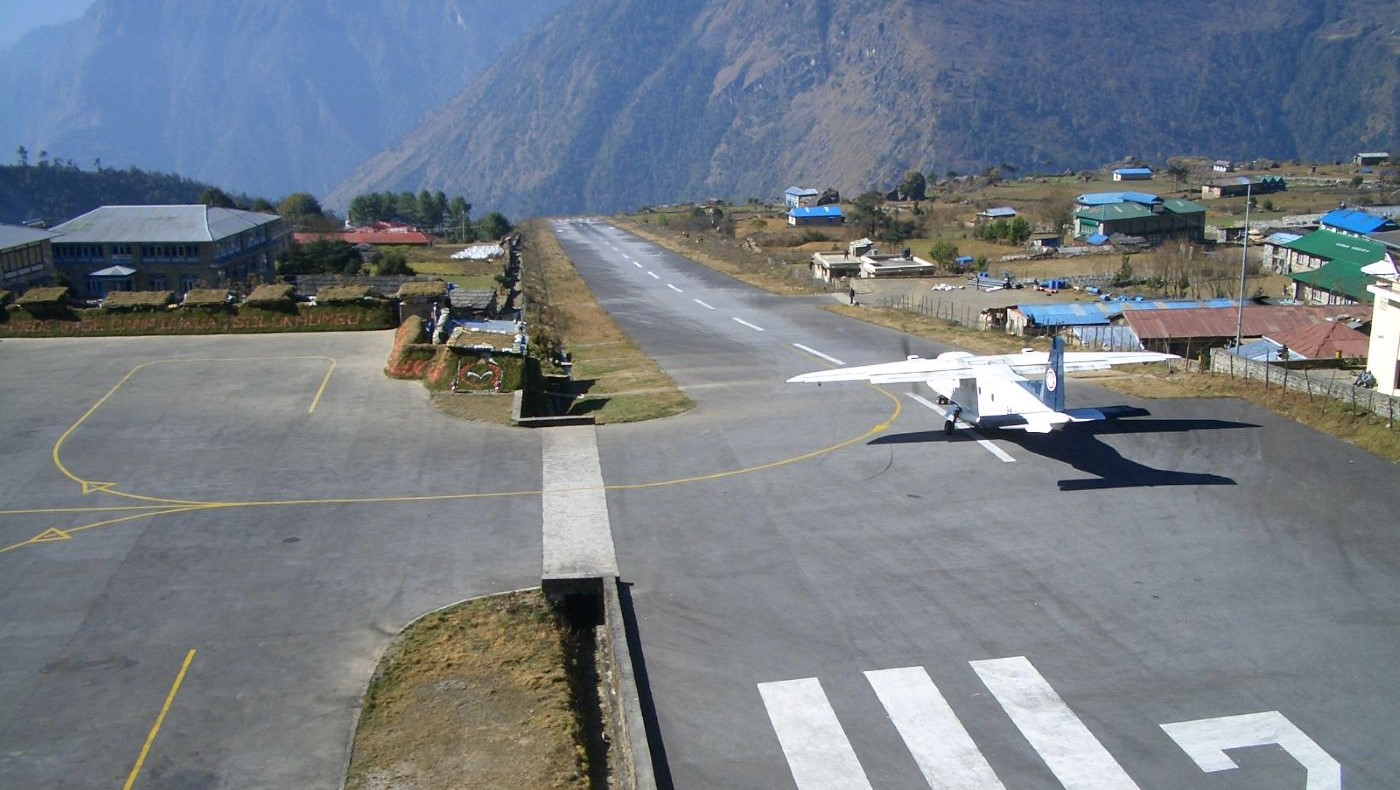
Everest trekkers fly from Kathmandu to Lukla (2,860m). The runway is short and sloped, and the flight is a highlight in itself. Weather controls everything here.
Lukla Airport, gateway to the Mount Everest.
In the busy spring and autumn months, flights often leave from Manthali airport in Ramechhap instead. That means a long drive from Kathmandu, sometimes starting in the middle of the night. We confirm timings at your briefing so nothing surprises you.
Before you fly, our guided Kathmandu day covers Pashupatinath, Swayambhunath, Boudhanath and Durbar Square. It is the same ground as our Kathmandu day tour.
Reaching Annapurna: The Road from Pokhara
Annapurna needs no flight. You travel from Kathmandu to Pokhara by comfortable tourist bus, a scenic ride of seven to eight hours. Pokhara greets you with lake views and an easy, relaxed mood.
From Pokhara, a private jeep takes you about three to four hours to Jhinu Bridge. The trek starts there. If you have an extra evening, explore the lakeside with our Pokhara valley sightseeing tour.
Difference 5: Scenery, Culture and the Moment You Reach Base Camp
Both treks reward you with huge mountains. In the Everest Base Camp Trek vs Annapurna Base Camp Trek comparison, the journey feels completely different. That is what most guests remember years later.
What you see on the Everest trail?
The Everest trail follows the Dudh Koshi River through the Khumbu, the homeland of the Sherpa people. You cross high suspension bridges and pass mani walls and yak pastures.
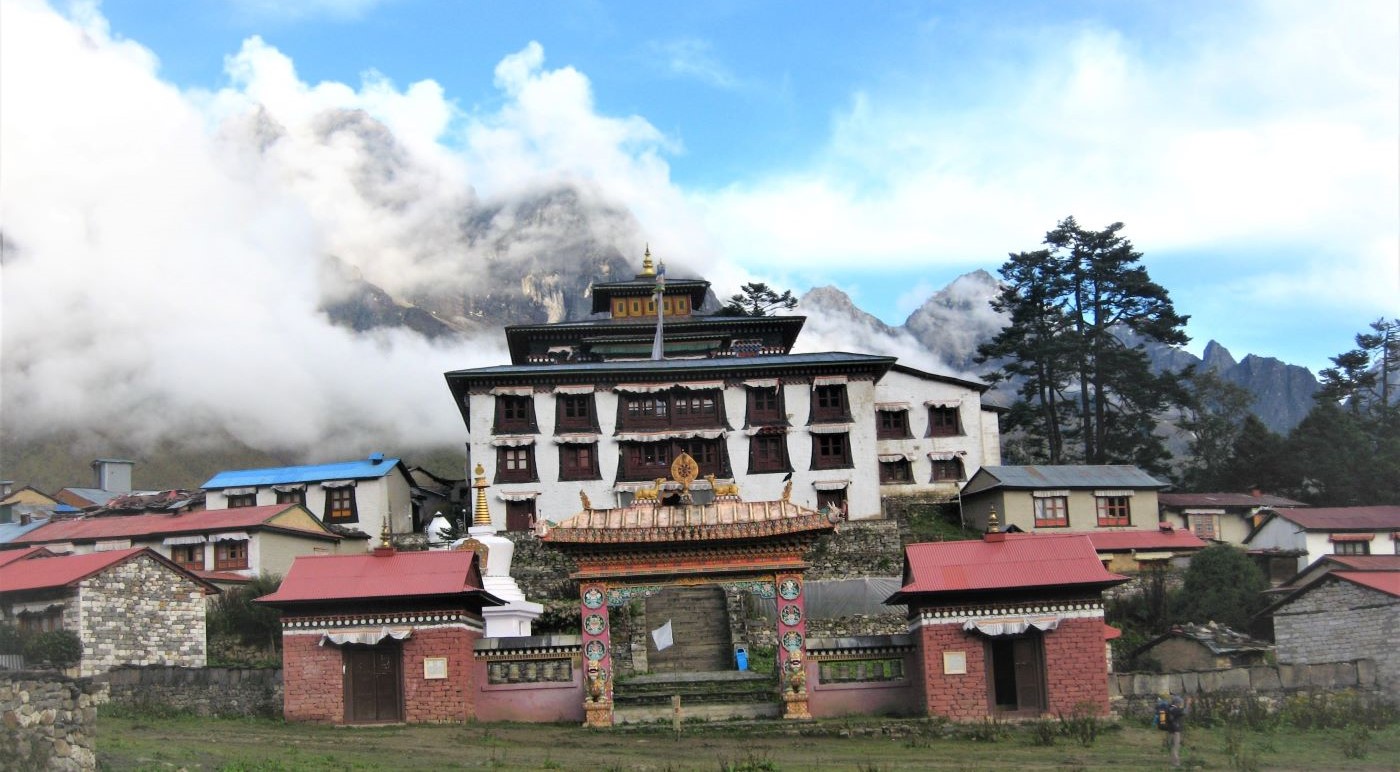
Namche Bazaar is the Sherpa trading town, and Tengboche Monastery sits beneath Ama Dablam.
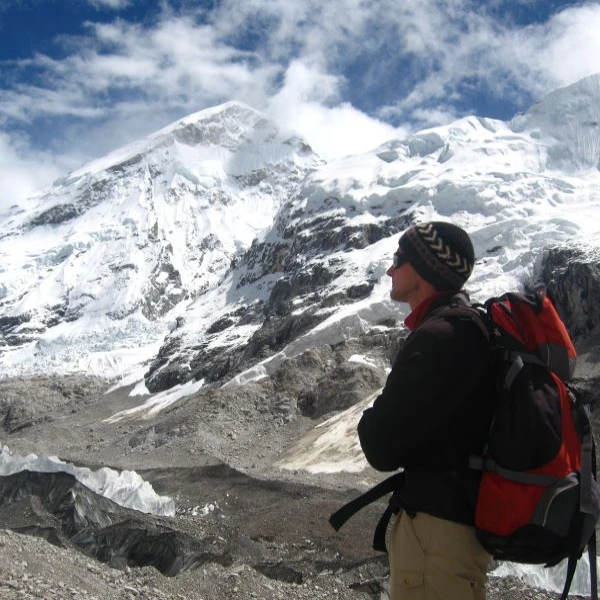
Above Thukla, stone cairns honour climbers who died on Everest. Most groups walk through in silence. Then comes the moment you reach base camp, among ice, prayer flags and the sound of the glacier cracking.
Can you see Everest from Everest Base Camp?
No, you cannot see the summit. Nuptse blocks it from Everest Base Camp.
The classic view comes from Kala Patthar (5,545m / 18,192ft) at sunrise, framed by Nuptse,Lhotse and Pumori.
What do you see on the Annapurna trail?
Annapurna changes routes and scenery fast. You walk through terraced farmland, then rhododendron and bamboo forest, then waterfalls and alpine rock. Chhomrong is a lively Gurung village with mountain views in every direction.
Beyond Machhapuchhre Base Camp, the valley opens into the Annapurna Sanctuary.Annapurna I, Annapurna South, Hiunchuli and Machhapuchhre (Fishtail) surround you in a full circle. At the end, the natural hot springs at Jhinu Danda soothe tired legs.
Difference 6: Best Time to Trek in 2027 and How Crowded Each Trail Gets
Both treks share the same two best time, so season is less of a deciding factor than people expect. Deciding Everest Base Camp Trek vs Annapurna Base Camp Trek for 2027? Think about weather and crowds, not just the month.
Spring and autumn
Spring (March to May) brings warm, stable weather. On the lower Annapurna trail, forests fill with rhododendron and wildflowers. In the Khumbu, expedition tents dot Everest Base Camp.
Autumn (September to November) has the clearest skies and the most reliable mountain views. In the Khumbu,Tengboche hosts its Mani Rimdu festival in autumn, usually October or November. If you want it, ask us when you book.
Tengboche Monastery, where Mani Rimdu Festival performs.
Winter and monsoon
Winter trekking is possible, and trails are quiet. But temperatures drop well below freezing at height, and snow can change plans. Monsoon rain makes Annapurna's lower trail muddy and slippery, and Everest views often disappear behind clouds.
Crowds and booking
Both trails get busy in peak months, and Everest tends to feel the busiest. Book three to six months ahead for the best dates. Some March 2027 small-group departures are already open on our departure dates page.
Difference 7: Lodges, Food and What Drives the Budget
You sleep in tea houses on both treks. They are simple, friendly and warm in the dining room. Comfort is a quiet but real part of Everest Base Camp Trek vs Annapurna Base Camp Trek. Know what to expect.
Tea house reality
Rooms hold two single beds, shared between two trekkers. Lower down, you may get an attached bathroom. Higher up, rooms are unheated and toilets are shared.
On Everest, comfort drops above Namche Bazaar. On Annapurna, the big change comes after Chhomrong. Settlements are smaller there, so rooms run short in busy seasons.
Food on the trail
Dal bhat, noodles, momo, soups, eggs and pancakes appear on every menu.
Menus shrink with altitude, because porters and mules carry supplies up. On Everest, we suggest vegetarian meals above Namche. There is no refrigeration up there.
What makes one trek cost more than the other
You will see different prices across operators, so it helps to know what drives them.
These are the main factors:
Flights: Everest Base Camp Trek needs the Lukla flight, whereas Annapurna Base Camp Trek does not.
Length: More days mean more guide, lodge and meal costs.
Support: Porters, private transport and extra nights change the total.
Both of our standard packages include permits, a licensed guide, meals and tea house stays on the trek. Check each trip page for current rates and exactly what is included.
Which Trek Should You Choose? A Quick Decision Guide
You have the facts now. Use this section to turn the Everest Base Camp Trek vs Annapurna Base Camp Trek comparison into a confident decision.
Pick Everest Base Camp if you:
Want to stand at the foot of the world's highest mountain, Mount Everest.
Are curious about Sherpa life, monasteries and mountaineering history.
Can set aside a longer window and enjoy a slow, steady climb.
Accept basic rooms and cold nights as part of the story.
Pick Annapurna Base Camp if you:
Have a shorter window and still want a true Himalayan trek.
Love variety such as forest, villages, waterfalls, glaciers and hot springs.
Want lower altitude and an easier first Himalayan experience.
Like the idea of finishing with a lakeside rest in Pokhara.
Match your situation
Your situation
Better fit
First Himalayan trek
Annapurna Base Camp
Everest is a lifelong dream
Everest Base Camp
Short annual leave
Annapurna Base Camp
Love Sherpa culture
Everest Base Camp
Mixed-fitness group or family
Annapurna Base Camp
If neither fits exactly
You have more choices than these two:
Everest View Trek: A shorter, gentler Khumbu walk to Namche, Tengboche and the Everest View Hotel.
If you are still undecided between Everest Base Camp Trek vs Annapurna Base Camp Trek, tell us your dates and fitness. We will point you to the right one, even if that means the shorter trip.
Why Trek Everest or Annapurna with Higher Limits Trek?
Higher Limits Trek & Expedition has operated in the Himalayas since 2009. We are based in Bhagwati Bahal, Thamel, and led by Gopal Shrestha. We are affiliated with Nepal's tourism bodies, including NTB, TAAN, NMA and KEEP.
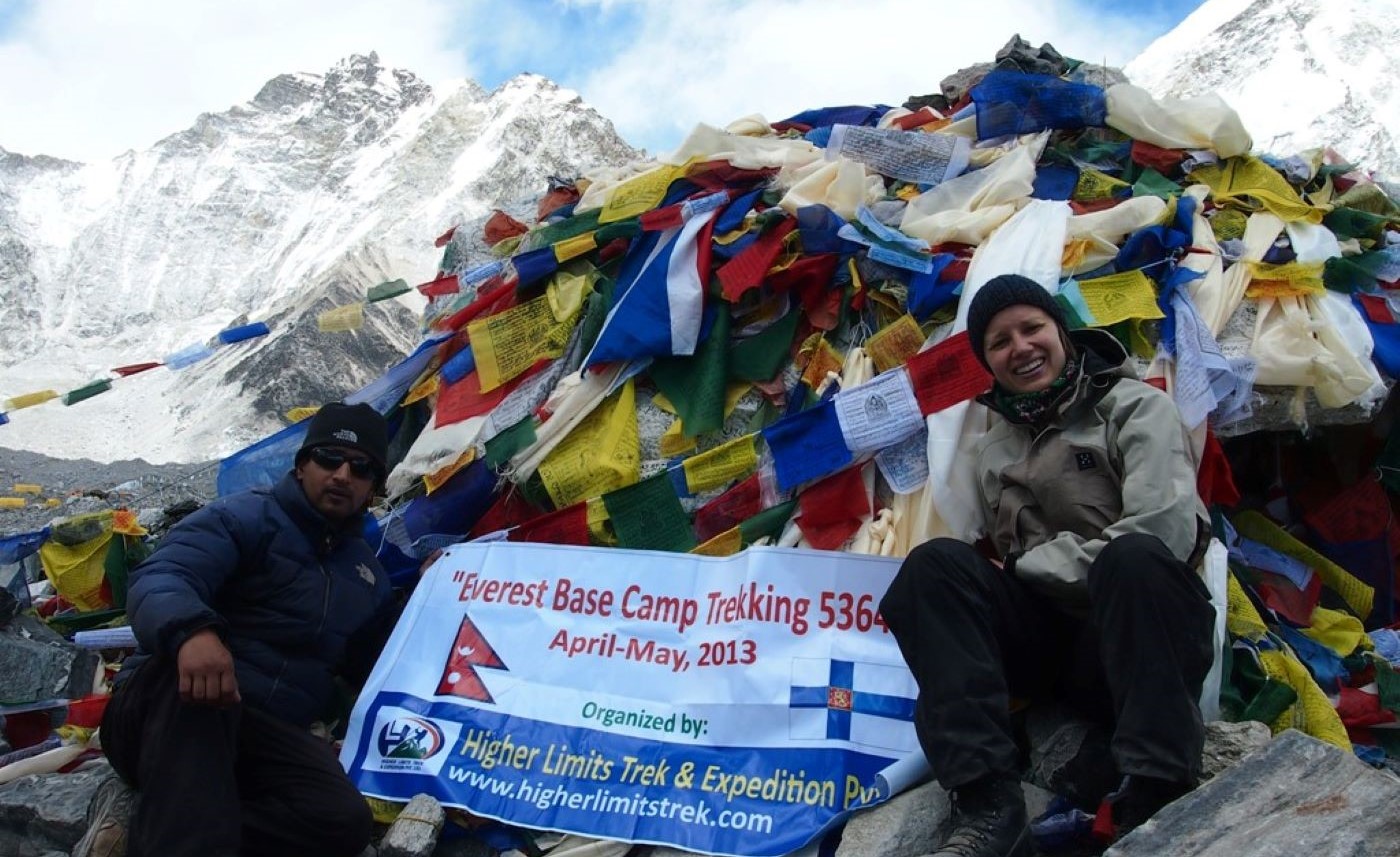
Our team at Everest Base Camp holding banner of Higher Limits Trek.
We have helped many guests settle the Everest Base Camp Trek vs Annapurna Base Camp Trek question before they lace up their boots.
Here is what that experience means for you on both treks:
Local experts: Our guides, porters and staff all come from mountain tourism.
100% guaranteed departures: Once you book, your trip runs smoothly without any inconvenience.
Small and private groups: We understand family values and ensure you can walk with family, friends or colleagues.
Safety first: Licensed guides, oximeters, medical kits and emergency helicopter coordination. On Annapurna, we also use satellite communication when needed.
Hassle-free paperwork: We handle your permits so you can just enjoy your trekking in Nepal.
Neither side of Everest Base Camp Trek vs Annapurna Base Camp Trek is a wrong choice.
Everest rewards patience and time with a once-in-a-lifetime view. Annapurna rewards curiosity with variety and a gentler schedule.
The best base camp is the one you can finish well and enjoy. Pick the trek that fits your calendar and your body today, not the one that sounds best at dinner parties.
What permits and visa do I need for Everest and Annapurna?
Everest needs the Sagarmatha National Park permit and the Khumbu Pasang Lhamu Rural Municipality entry fee. Annapurna needs the Annapurna Conservation Area Permit (ACAP). We arrange these for you. For Annapurna, we need a copy of your passport, your visa, a passport photo and insurance details. A Nepal tourist visa is separate, and you can apply on arrival or online.
What should my travel insurance cover?
Insurance is compulsory on both treks. Make sure it covers high-altitude trekking up to 6,000 metres, helicopter evacuation, hospital stays and medication. We arrange an emergency rescue helicopter, and your insurer pays for it. Read the excess terms carefully before you buy.
Can I trek either route without a guide?
Rules for independent trekkers have changed several times, so check the current regulations before you travel. We always recommend a licensed guide. A guide handles navigation, monitors altitude and speaks the local language. Our packages include one.
How should I train, and for how many weeks?
Start at least eight to twelve weeks out. Do cardio three or four times a week, plus squats, lunges and step-ups for leg strength. Once a week, hike five to six hours with a loaded daypack of 6–8 kg. If you live somewhere flat, use stairs, which also prepares you for Annapurna's stone steps. Wear your boots on every hike to avoid blisters.
What happens if the Lukla flight is cancelled?
Flights depend on weather, and delays are common even on sunny days. Our Everest itinerary includes a spare day in Kathmandu for this reason. We can also rebook you on the next flight. If everyone in the group agrees, we can arrange a helicopter at extra cost. Do not book a tight international flight home straight after your trek.
Do I need a porter, and how much luggage can I take?
A guide is included, and a porter is optional but recommended. One porter carries about 20–25 kg for two trekkers, so you only carry a daypack. On the Lukla flight, the usual limit is 15 kg per person, including your daypack. You can leave spare luggage at your Kathmandu hotel or our office.
What gear do you provide, and what should I pack?
We provide a sleeping bag, down jacket and duffel bag if needed, which you return after the trip. You also receive a medical kit, a trekking map and a branded T-shirt. You need to bring your own broken-in boots, warm layers, a headlamp, sunglasses and a reusable water bottle. Our trip pages include full equipment lists.
Will I have Wi-Fi, charging and cash access?
Wi-Fi and charging are available in many lodges for a small fee, but solar power is rationed. Bring a power bank. Ncell and NTC SIM cards work up to around Tengboche on Everest. ATMs are not available along the Annapurna route, and those in Lukla and Namche can be offline. Withdraw enough cash in Kathmandu or Pokhara.
Can older trekkers, children or people with health conditions do these treks?
There is no official age limit as health and fitness matter more. Children are welcome if they are fit and accompanied by parents, but altitude affects them too. If you are over 60, or have heart, lung or blood conditions, talk to your doctor first. Tell us before booking so we can plan safely.
Can I do both treks in one trip?
Yes, but it is a long journey of around four weeks. The two regions are far apart, so you need a road transfer between Kathmandu and Pokhara. Most trekkers do better doing one now and the other on a later trip. If you want both, we can design a combined itinerary through our customize trip service.