Best time for the Everest Base Camp Trek
The best seasons for the Everest Base Camp Trek are:
Spring (March - May)
The spring season is one of the most popular times for the Everest Base Camp trek. During this season, the weather is stable, with clear skies, and offers beautiful scenery when trekking through the mountains. The rhododendron trees that grow in the dry forests surrounding Everest are also flowering at this time of year, creating not only a beautiful scene but also providing pleasant weather for travelers. This season is perfect for traveling and experiencing the beauty of nature.
Autumn (September - November)
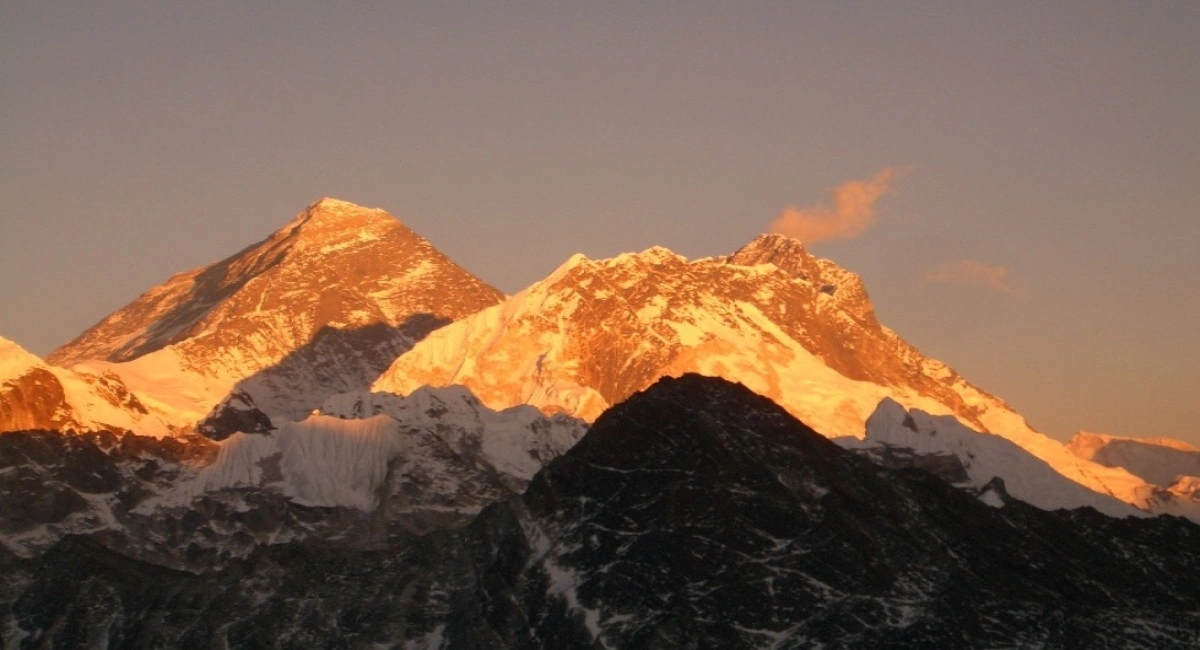
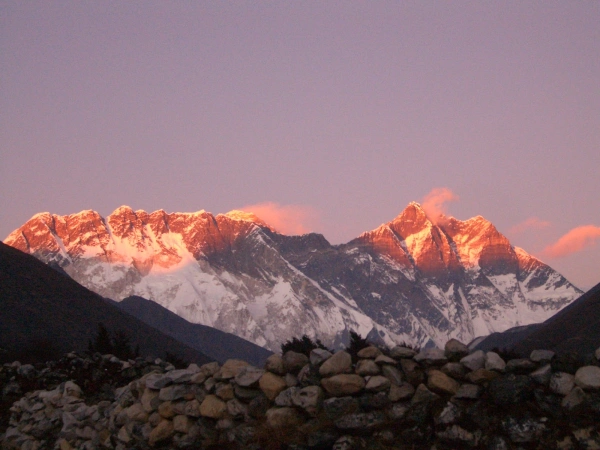
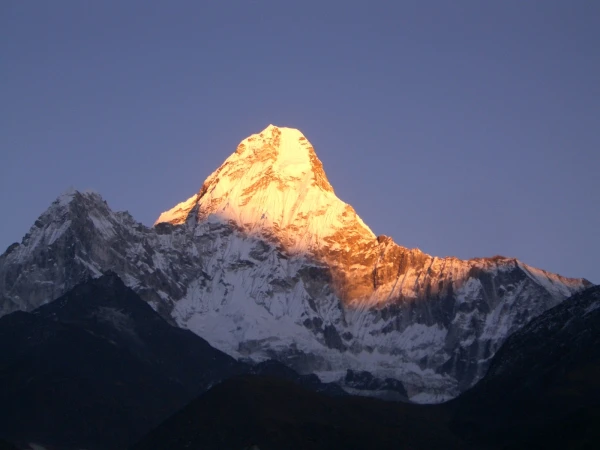
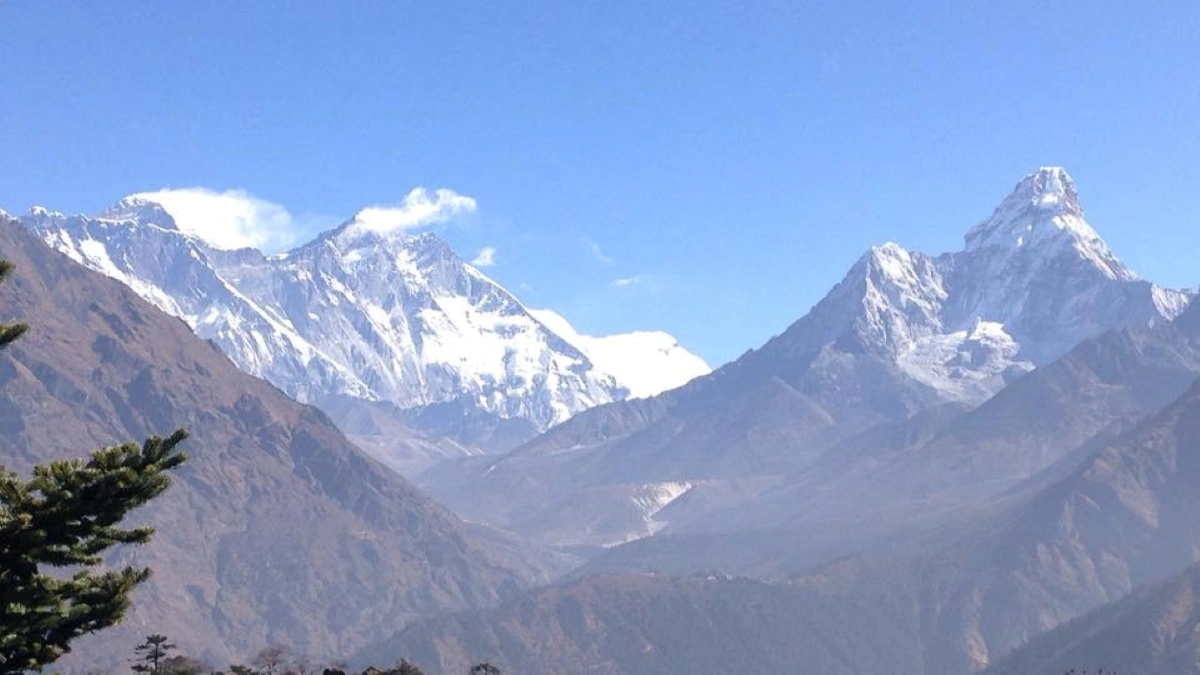
Autumn is generally considered the best time for trekking in the Everest region. After the monsoon season, the atmosphere is clean and free of dust, resulting in a clear line of sight to the mountains. Typically, the sky is clear during this time, allowing for uninterrupted panoramic views of the beautiful Himalayas, including Mount Everest. The weather is usually stable, which helps ensure a safe and comfortable trekking experience.
Winter treks are also possible for experienced trekkers, while the monsoon season is less recommended due to rain and cloudy views.
Health & Safety on Everest Base Camp Trek
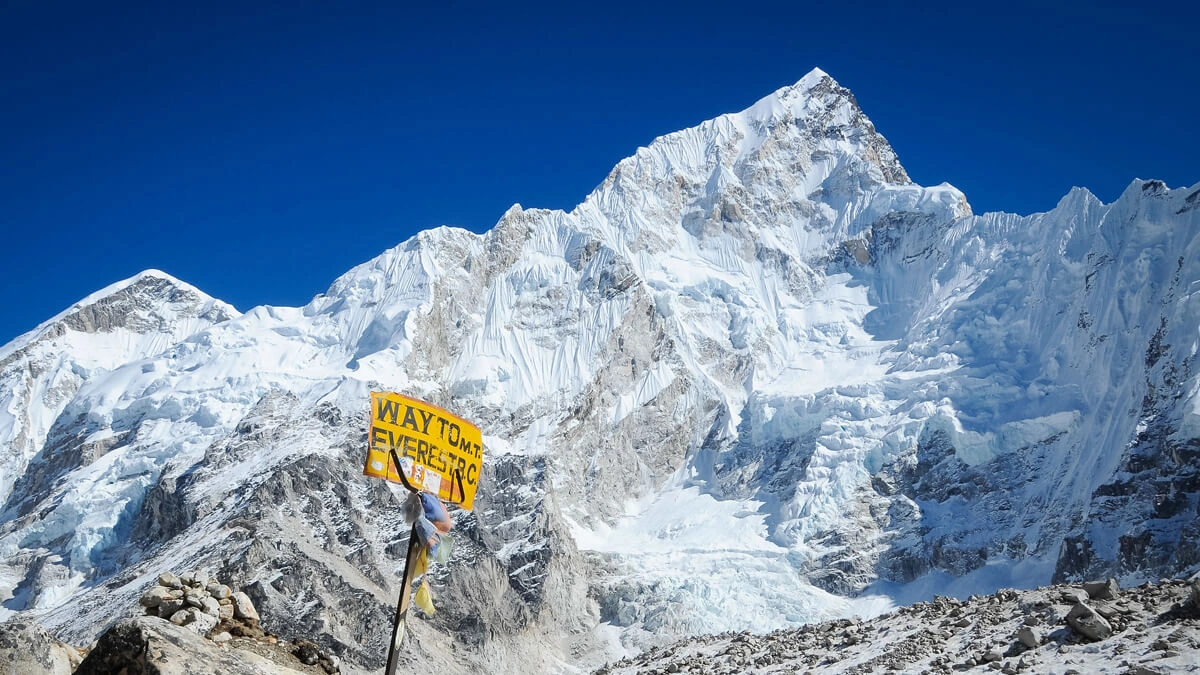
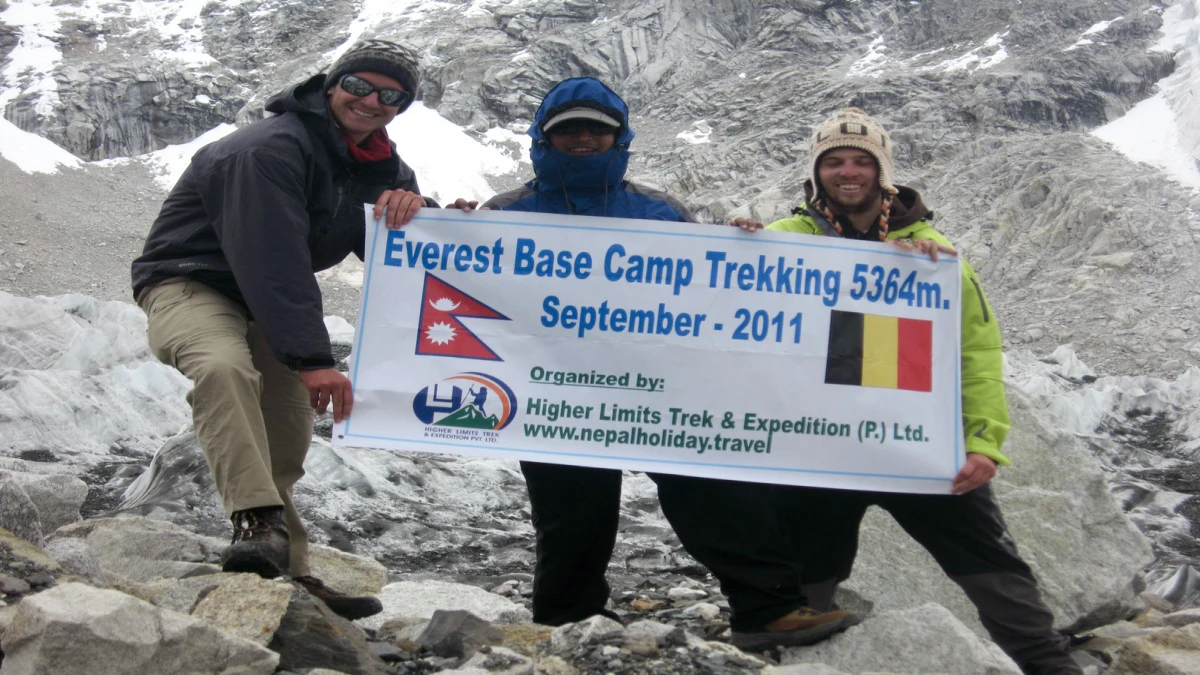
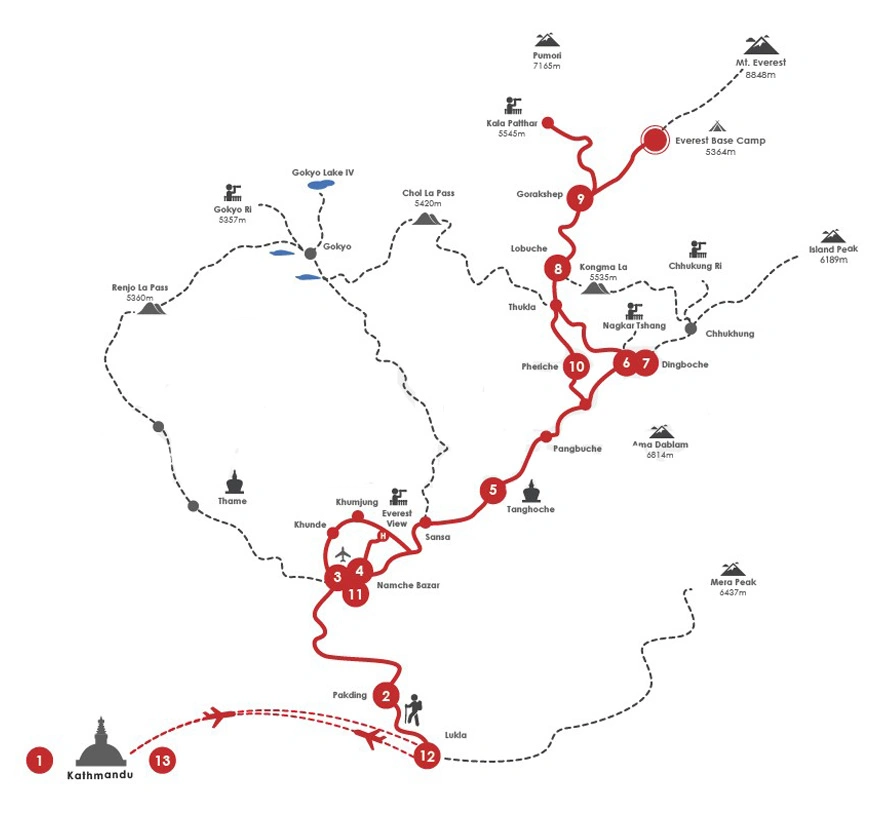
Reaching a high altitude point such as Kala Patthar (5,545 m) and Everest Base Camp (5,364 m) is an awe-inspiring experience, but high altitude can affect anyone, so it is better to have information about high altitude.
Signs to watch for:
- Headaches or dizziness
- Nausea or loss of appetite
- Shortness of breath even while resting
- Fatigue or trouble sleeping
How to protect yourself during the trek:
- Take it slow: There are two rest days in Namche Bazaar and Dingboche, which allow your body to adjust naturally according to your surrounding environments.
- Hydrate & fuel your body: During the trek, drink enough water to stay hydrated and eat nourishing meals to stay strong.
- Listen to your body: You need to listen to your body and take rest when needed. Your guides are trained to help, so listen to your guides.
- Avoid alcohol & smoking: Drinking alcohol and smoking can worsen altitude sickness, which is why you need to avoid them.
You can enjoy every sunrise, every stunning view, and every step along the Khumbu trails with confidence with proper acclimatization.
For a more detailed guide on recognizing symptoms, prevention strategies, and what to do if altitude sickness strikes, you can read the full article on How to Prevent Altitude Sickness on the Everest Base Camp Trek.
Travel Insurance Recommendations
Mountain adventure is thrilling, but peace of mind is priceless. We strongly recommend travel insurance that covers the following:
- High-altitude trekking (up to 6,000m)
- Medical emergencies and evacuation by helicopter
- Hospital stays, medications
Knowing you are fully covered lets you focus on the beauty around you – the glacial valleys, towering peaks, and the quiet majesty of Everest – without worry.
Tips for Staying Fit Before the Trek
Recommended preparation:
- Cardio training: Running, cycling, or brisk walking to strengthen stamina.
- Leg & core strength: quats, lunges, planks, and stair climbing to handle long days on rugged trails
- Endurance practice: Gradually increase distance and elevation in hikes
- Flexibility & balance: Yoga or stretching to prevent injuries and keep energy flowing
With preparation and care, each step becomes part of the story – the story of you standing in the shadows of the world’s tallest peaks, feeling alive, inspired, and unstoppable.
Environmental & Ethical Travel
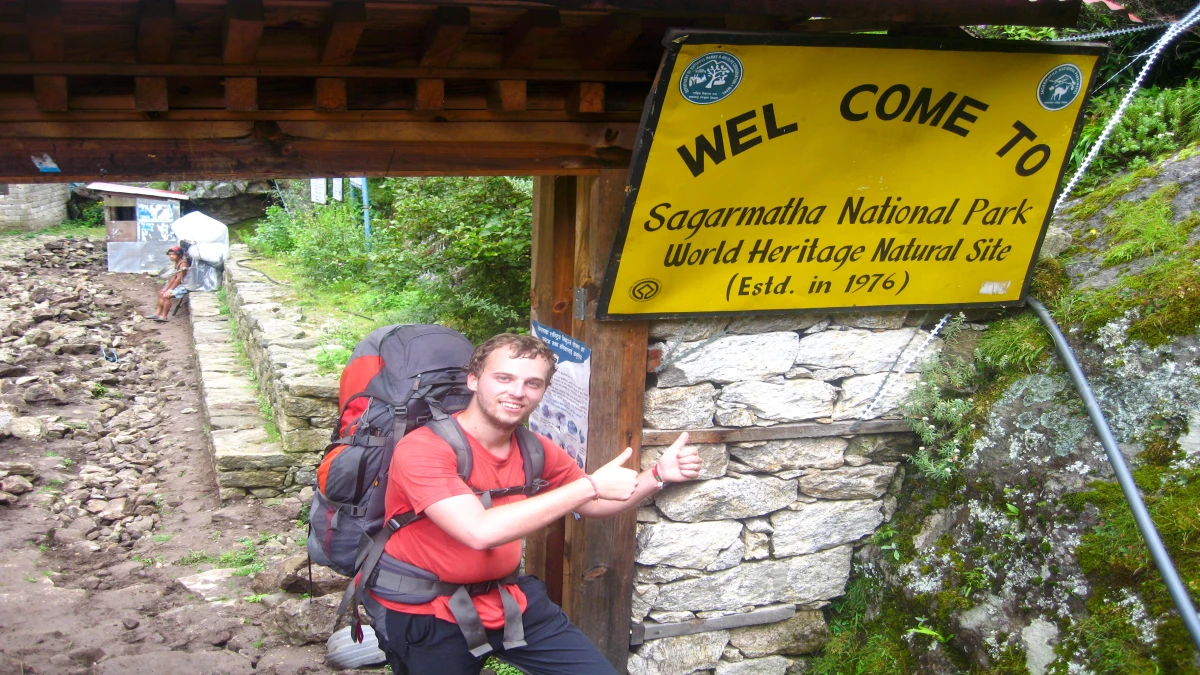
Trekking to Everest Base Camp is not only reaching your destination – it is also about respecting the local people and the nature of the region. The Everest journey will take you to Sagarmatha National Park, a beautiful and protected area. You can help to keep this place clean and beautiful for future trekkers by traveling responsibly.
How to Trek Responsibly in Sagarmatha National Park
The Everest region is very special and delicate. Your small actions can make a big difference in the environment in the Everest Region.
Here’s how you can help Nature:
- Stay on the main trails
- Carry a reusable water bottle
- Do not disturb animals or nature
- Avoid using plastic as much as possible
By implementing the above simple rules, you play a vital role in helping to protect the mountain region while enjoying your trek.
Leave No Trace Principles
“Leave No Trace” means leaving the mountains just the way you found them.
Simple tips to be Nice:
- Do not throw trash—carry it with you
- Use proper toilets and waste areas
- Do not pick plants or damage nature
- Keep the trails clean
If every trekker does this, the Everest region will stay clean and beautiful for the future.
Why Choose Everest Base Camp Trek with Higher Limits?
- Run by Himalayan Travel Experts
- Trailer - Made Trips & Extensive Care
- 100 % Guaranteed Departures
- Specialized in Small Group & Private Trips
- Experienced Local Guides and Professional Drivers
- Hassle-Free Permit and Travel Arrangements
- Reliable Service with Safety as Top Priority
Meals / Food:
Every day’s breakfast, lunch, and dinner are included in the package during the trek. This will be a dish of Nepali, Indian, or Continental cuisine cooked by the lodging you stay at.
Accommodations / Hotels:
The whole trek is a tea house trekking which means we will stay at simple tea house lodges during the trek, which will be wooden and stone houses with outside toilets and bathrooms mostly.
Electricity:
Almost everywhere, electricity is available on these trekking routes, but still please be prepared with a 2-pin plug, a power bank, spare batteries, and a head lamp, etc.
Acclimatization:
Keep in mind that you will be reaching above 5000m during the journey to Kalapather. Walking fast at such an elevation could lead to medical complications (Acute Mountain Sickness), which could be serious. There is less oxygen compared to sea level in high-altitude places. The higher the altitude, the less oxygen in the air. Your body needs a day to acclimatize to this environment, which is why we will take two days' rest during the trip, a day at Namche Bazaar & a day at Dingboche. Although we provide information regarding AMS insurance, the only option for treatment is descent (evacuation). We advise that clients with known heart, lung, or blood diseases, or clients over the age of 60, discuss with their doctor before traveling with us.
Health and Experience Required:
This trekking involves five to seven hours of walking per day. However, there is a part of this trek at a very high altitude, which will take a physical toll. There are no special physical or training requirements, but high altitude experience & walking are a benefit.