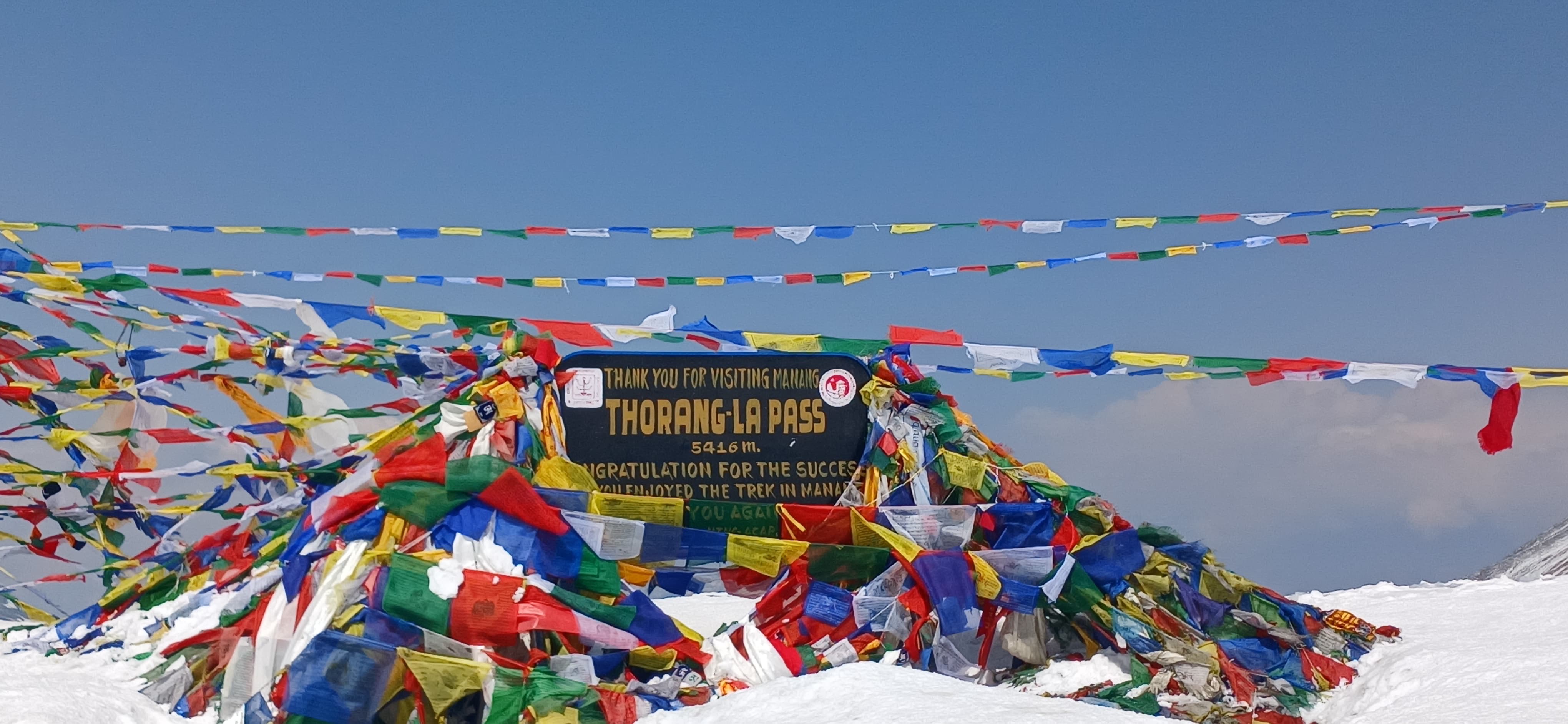
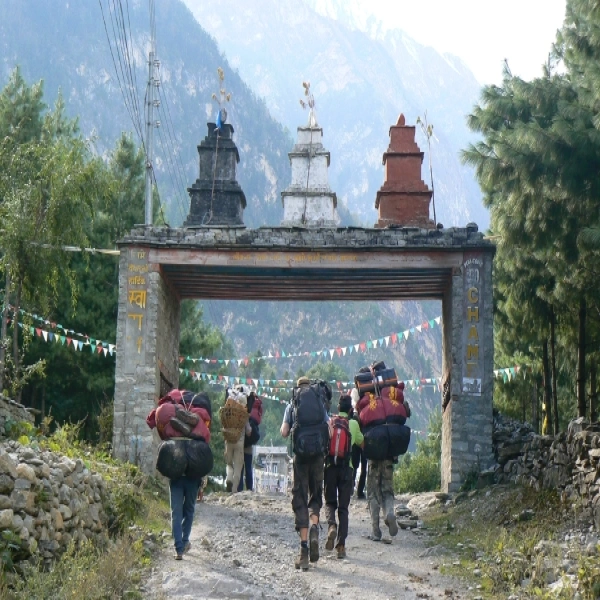
The Annapurna Circuit Trek is considered a strenuous trek due to the several factors that make the trek challenging. The route includes long days of walking, constantly changing terrain and altitude, and reaches 5,416 m/ 17,769 ft at Thorong La Pass. The trek does not include any technical climbing. But sometimes the hardest part isn’t always the one trekkers expect.
Trekkers think Thorong La is the biggest obstacle before the trek, but in our experience, the days toward the pass can matter just as much. The final section crossing Thorong La Pass feels much harder than it needs to be if you move too quickly, if you do not give your body enough time to adjust to altitude, and neglect the effect of several days of walking.
So, how challenging is the Annapurna Circuit Trek actually? It depends more on how well you prepare, pace yourself, and respond to conditions along the way, and less on whether you are an experienced trekker.
Through this guide, we will look over the usual list of “high altitude, long walking days and Thorong La” and explain other factors that make the Annapurna Circuit Trek challenging. We will discuss what you can do to make the trek easier or more manageable and successful.
Thorang La Pass: The Day Everyone Worries About
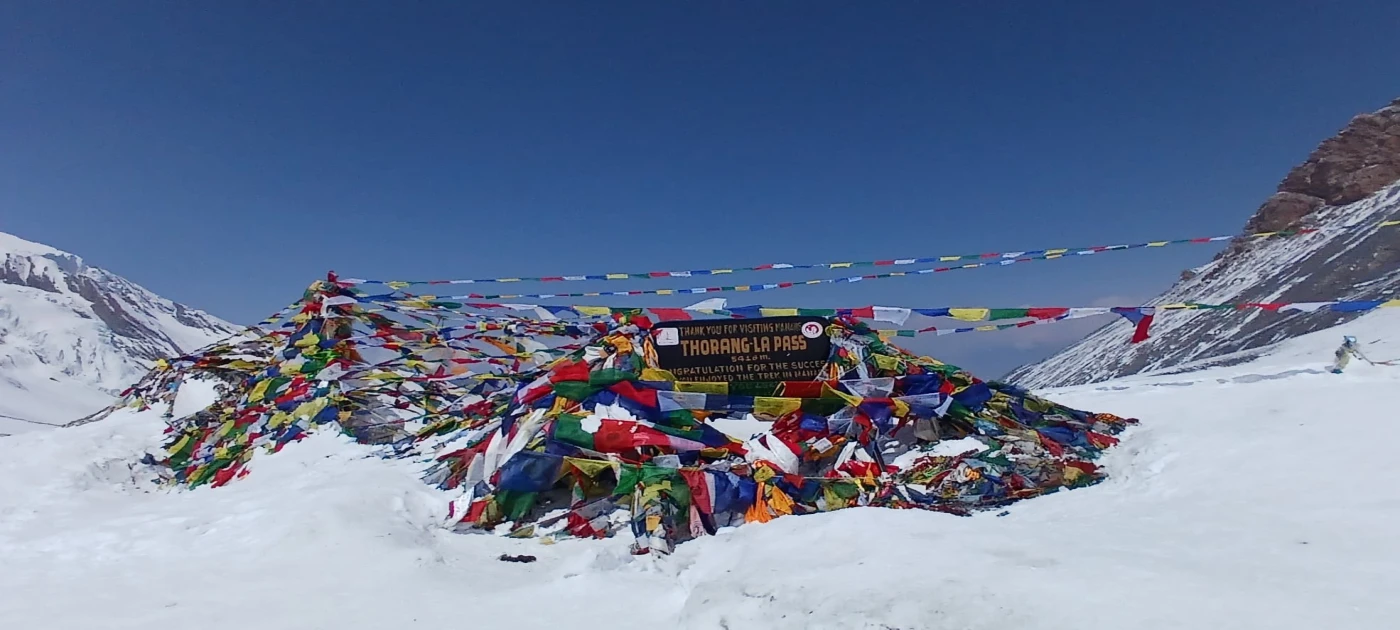
Thorang La Pass at 5,416 m is the highest point on the Annapurna Circuit Trek
Thorong La Pass at 5,416 m (one of the world’s highest trekking pass) is the highest point on the Annapurna Circuit Trek and the most demanding day of the trek for many trekkers. On this Thorong La Pass day, we begin the trek from Thorong Phedi before sunrise, around 3:00 AM to 4:00 AM. We have to start our day early because the timing really matters. By the afternoon at the pass, the high winds start which makes it more challenging to cross the pass. The duration from Thorong Phedi to Muktinath takes about 8-9 hours.
In a single day, you have to climb around 800 meters to Thorong La Pass and descend over 1,600 meters toward Muktinath, which is genuinely difficult. At high altitude, the cold can be uncomfortable, making every step feel slower, and the descent can be challenging on tired legs. But Thorong La Pass day is not the only thing you need to be ready for.
How you will feel on Thorong La Pass depends very much on what you have done in the days before the pass. The crossing can become much more difficult if you don’t maintain a steady pace, skip your acclimatization day in Manang, or ignore any high altitude symptoms.
Thorong La is a tough day, but preparing for it starts several days earlier. Walking at a steady pace, giving your body time to adjust to the altitude, and getting enough rest your journey can make a big difference.
What Trekkers Actually Ignore: Altitude Mismanagement
In the Himalayas, the altitude is actually a bigger concern than the trail itself. Some trekkers feel comfortable around Chame and Upper Pisang in lower sections, and ultimately think they can walk faster or climb higher than planned. Your body needs time to adjust to gaining altitude. Pushing too hard early in the trek can leave you more tired and less prepared for the upcoming higher sections. The symptoms or problem may only appear a day or two later.
The acclimatization day in Manang is an essential part of the trek, but simply having a rest day on the itinerary does not mean your body will suddenly adjust to the altitude. Walking too hard during the acclimatization day or rushing through the higher sections after Manang can still put extra stress on your body.
The early signs of altitude sickness can include loss of appetite, unusual tiredness, constant headache, dizziness, or poor sleep. The common symptoms can easily be ignored as normal tiredness after a long day of walking.
These are the reasons our local guides pay attention not only to the Thorong La Pass day or only to how far you have walked, but also to how you are feeling along the way. A sudden change in energy, difficulty recovering after a climb, or a slower walking pace than before can be signals to slow down and rest.
The goal is not to reach the next destination as fast as possible. It is to reach the destination feeling well enough to continue the next day safely.
That's why walking at a steady pace, taking your acclimatization day, and listening to your body are so essential for the successful Annapurna Circuit Trek.
Why Does Day 10th Feel More Difficult Than Day 3rd?
One of the biggest challenges of the Annapurna Circuit Trek is not a single difficult day. It is the effect of walking for several days in a row.
On Day 3 of your trek, a 5 to 6 hours walk may feel comfortable because your body is still fresh. By Day 10, the same amount of walking can feel much harder. Your legs have already spent several days ascending and descending uneven trails. Your sleep may not be as comfortable as it is at home. The early mornings and limited recovery can slowly make you fatigued. Less oxygen compared to lower altitudes.
The trail does not always become suddenly harder. Sometimes, your body is carrying the fatigue from the days before. The repeated ups and downs and long stair sections in the lower part of the circuit can also make your body more tired than you expected.
This is why it is important not to use all your energy in the first few days. Walk at a steady pace, take proper breaks, eat well, and save some energy for the days ahead. On a long trek, managing your energy is just as important as being physically fit.
There might come a point on the Annapurna Circuit Trek when the mountains are still beautiful, but you are simply tired of walking. After spending many days on the trail, waking up early, packing your bag, walking for hours, and staying in a different teahouse each night can start to feel repetitive. When the next destination still seems far away, even a normal walking day can feel longer than expected.
This doesn't happen to everyone, and it doesn't happen at the same point for everyone. Your pace, weather, sleep, and how your body is recovering can all make a difference. If you reach this stage, don't think of it as a sign that you cannot finish the trek. Take the day one step at a time instead of thinking about how many days are still left. A good meal, enough rest, and a comfortable walking pace can make a bigger difference than trying to push yourself to cover more distance in a day.
Long treks are not only a test of your legs. Learning to manage your energy and stay patient is part of the experience too.
The Practical Challenges That Are Real But Manageable
Challenges on the Annapurna Circuit Trek are not only about steep climbs or altitude. Some of them are just a part of staying in the mountains for several days. They are usually manageable when you know what to expect in the Himalayas.
Comfort Teahouses
As you get higher, the accommodation becomes basic and simple. The facilities, like a reliable network, hot showers, and private bathrooms, may not be available in the upper sections of the trail, but our team will still do their best to choose a good one.
What to do: Expect basic facilities and carry a power bank, warm sleeping clothes, and any personal items you need to stay comfortable.
Mobile Network and Internet
You won't have the same reliable connection throughout the trek. Mobile network and the internet can become weaker or unavailable in some of the higher sections. Even when there is a signal, internet speeds may be slow.
What to do: Download your maps, important documents, and anything else you may need before heading into areas that have limited connectivity. Let family or friends know that you may not be reachable at all times.
Weather Changes
Mountain weather can change quickly. You may start walking under clear skies and find yourself dealing with clouds, wind, rain, or much colder conditions later in the day. The higher you go, the more noticeable these changes can become, particularly as you approach Thorong La.
What to do: Keep your rain jacket (pancho), warm layer, gloves, and other weather protection somewhere easy to reach in your backpack. Don't wait until the weather changes to look for them.
Food at Higher Altitudes
Food choices are usually more varied in the lower villages. As you gain altitude, menus become simpler, and meals such as dal bhat, noodles, soups, potatoes, and other basic dishes become more common.
You may also find that some foods take longer to prepare or that certain menu items are not always available.
What to do: Choose meals you know you can eat comfortably and fresh by consulting with your team (guides), and carry a few snacks, such as nuts, chocolate, or energy bars, for extra energy during the day.
These things are part of mountain life rather than reasons to worry about the trek. When you know what to expect and prepare for the basics, they become much easier to manage.
How to Make the Trek Easier
You do not need to be the fittest person in the group to complete the Annapurna Circuit Trek comfortably. A few simple habits can make a big difference:
Take acclimatization days seriously. Your body needs time to adjust as you go higher, so do not skip the planned rest day in Manang.
Start at a steady pace. The first few days may feel easy, but saving your energy early can help you later in the trek.
Drink water regularly. Do not wait until you feel very thirsty. Keep your water bottle with you and drink throughout the day.
Eat enough during the trek. Your body uses more energy than usual when you are walking for several hours each day. Eat regular meals and carry simple snacks such as chocolate, nuts, or energy bars.
Expect some tired days. After several days of walking, it is normal to feel more tired. Take breaks, listen to your body, and tell your guide if you are struggling.
Pay attention to altitude symptoms. Your guide will monitor how you are feeling and help identify early signs of altitude sickness as you get higher.
Frequently Asked Questions
Is the Annapurna Circuit Trek challenging?
It is a challenging (strenuous) trek, but it is manageable for people with reasonable fitness and proper preparation. The main challenges are the long trekking days, changing terrain and the high point at Thorong La Pass but it is not technical climbing
How many hours do you walk each day?
Most days take around 5 to 8 hours, depending on the route and your pace. The crossing of Thorong La is a longer day and usually starts early in the morning.
Do I need previous trekking experience?
Previous high-altitude trekking experience is helpful but not essential. Being comfortable with long walks and preparing your fitness beforehand are more important.
What is the highest point of the trek?
The highest point is Thorong La Pass at 5,416 meters (17,769 feet). Reaching this altitude is one of the main challenges of the Annapurna Circuit Trek but view and beauty is incomparable.
Is there a rest day on the trek?
Yes. The itinerary includes a rest and acclimatization day in Manang. You can use this day to relax, explore the area and allow your body to adjust before heading higher.
What should I eat and drink during the trek?
Drink water regularly throughout the day and do not wait until you are very thirsty. Eat proper meals and keep a few easy snacks, such as nuts, chocolate or energy bars, for extra energy between meals.
What happens if I feel unwell during the trek?
Tell your guide as soon as you notice something is wrong. Your guide can assess your condition and help decide whether you should rest, move more slowly, or descend if necessary.
How can I prepare for the trek?
Build your stamina before the trip starts with regular walking, hiking, stairs or uphill exercise. It is also useful to get used to walking for several hours at a time, since trekking days are much longer than a normal daily walk.
What equipment do I need for this trek?
Warm clothing is important, along with a sleeping bag and down jacket. Please check the essential section of the trip for a list of equipment.