Trekking permits are not just formal documents, it is mainly designed to ensure trekkers' safety, protect the culture and environment of the region, support the local conservation efforts, and maintain trails. These permits also help the government to track trekkers for emergency situations, and maintain the trails for future adventures.
At Higher Limits Trek, you don’t need to worry about any paperwork; we have guided many trekkers through Nepal’s permit process. We will make the process stress-free. This guide will help you to understand Nepal’s permit system efficiently and ensure a smooth, safe, and unforgettable trekking experience in Nepal.
Why Trekking Permits Are Mandatory in Nepal?
A trekking permit is an official document that allows you to explore Nepal’s beautiful mountain trails legally. It is not just a legal requirement; this ensures your safety and helps the government monitor trekkers and respond quickly in case of any emergencies.
Don’t think your Nepal trekking permit is just a formality; it’s your contribution to preserving the wildlife, natural beauty, culture, and environment of the regions for future generations. Here is where every permit fee goes.
- Ensures trekker safety and rescue support
- Support the local conversation efforts
- Maintenance of trails
- Preserve the culture and environment of the region
- Support the local communities
- Conserve Protected Areas and Wildlife
Types of Trekking Permits in Nepal:
Nepal has a different type of trekking permit system. Depending on your trekking routes, you may need different kinds of permits, so it is essential to understand the types of permits for a smooth and stress-free journey.
TIMS Card (Trekker’s Information Management System):
The TIMS card is the most common permits which is required for any trekking in Nepal. The main goal is to register trekker and ensure their safety in case of any emergencies. TIMS card is mandatory for the most popular trekking routes like EBC (Everest Base Camp), Langtang Valley, and Annapurna Circuit, and all.
Key Features of TIMS Card:
- Tracks trekkers on their route to ensure safety.
- Helps authorities coordinate rescue operations in emergencies.
- Required for both independent trekkers and those trekking with a guide.
National Park/Conservation Area Permits:
Most trekking routes pass through protected areas, like conservation and national park regions, each requiring specific permits:
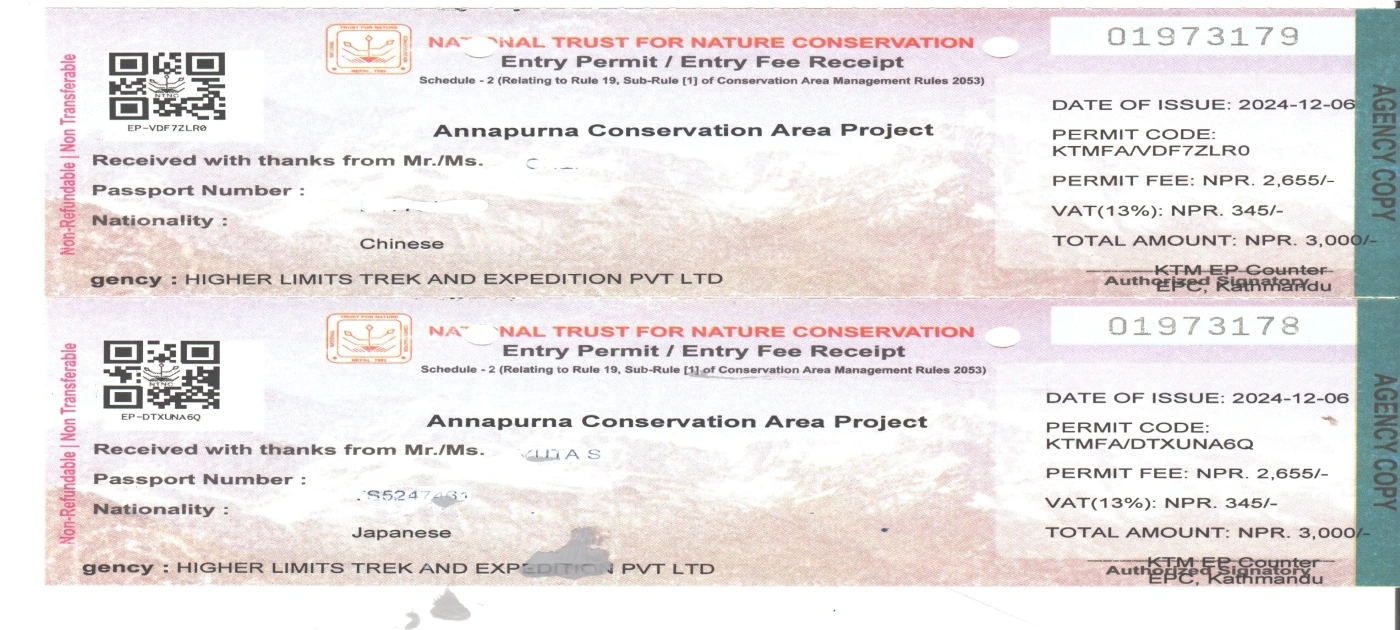
Annapurna Conservation Area Permit (ACAP):
Required for Annapurna region treks and surroundings regions.
Sagarmatha National Park Permit:
Mandatory for the Everest Region Treks.
Langtang National Park Permit:
Essential for Gosaikunda Region and Langtang Valley Treks
Makalu Barun National Park Permit:
Needed for eastern Nepal adventures
Permit fees help fund park maintenance, wildlife protection, and sustainable tourism initiatives, including the conservation of endangered species like snow leopards and red pandas.
Restricted Area Permits (RAPs):
In Nepal, some regions are classified as “Restricted Area” due to many reasons such as their border proximity, remoteness, or sensitive environment. That’s why these specific areas require special permits, often only issued to trekkers accompanied by licensed guides. The area includes the following regions:
Upper Mustang (USD 500 per person for the first 10 days and USD 50 per person per day beyond 10 days)
Upper Dolpo (USD 500 per person for the first 10 days and USD 50 per person per day beyond 10 days)
Tsum Valley (USD 40 per week Sept-Nov and USD 30 per person week Dec-Aug)
Manaslu Circuit Trek (USD 100 per week Sept-Nov and USD 75 per week Dec-Aug)
Both the standard Manaslu Circuit Trek and the Comfort Manaslu Circuit Trek require this permit.
This restricted area permits are mandatory to ensure that trekkers do not impact the local communities or ecosystems negatively, and often include additional fees to support local development of the region.
Why Multiple Permits May Be Required?
On some trekking routes, you may require more than just one permit. Let’s take an example, trekking to Everest Base Camp requires both Sagarmatha National Park entry permit, TIMS card, and Pasang Lhamu Rural Municipality entry permit. Same as in certain sections of the Annapurna Circuit, “Upper Mustang” requires an Annapurna Conservation Area Permit (ACAP) permit and TIMS card. We suggest that you to always check the route in advance to make sure you have all necessary permits with you.
Popular Trekking Regions and Required Permits
Here are some of the most popular trekking routes in Nepal and the required permits.
| Trekking Regions |
Required Permits |
| Everest Region |
TIMS, Sagarmatha National Park Entry, Pasang Lhamu Rural Municipality Entry Fee |
| Langtang Region |
TIMS, Langtang National Park Entry |
| Annapurna Region |
TIMS, ACAP |
| Manaslu Region |
RAP, Manaslu Conversation Area Permit, TIMS |
| Upper Mustang |
Restricted Area Permit, ACAP |
| Mardi Himal |
TIMS, ACAP |
| Nar-Phu Valley |
Restricted Area Permit, ACAP |
| Kanchenjunga |
Restricted Area Permit, Kanchenjunga Conservation Area Permit |
How to Get a Trekking Permit in Nepal for Foreigners:
Foreigners need to prepare the essential documents in order to get the trekking permits in Nepal.
Required Documents:
To get a trekking permit in Nepal, you need:
- Vali passport
- Nepal visa
- Two passport-sized photos
- Emergency contact details
- Travel insurance with emergency evacuation (recommended)
- Proof of licensed guide certificate and trekking agency's legal documents (for restricted areas)
Where to Apply
Online: Department of Immigration (DoI) / Nepal Tourism Board (NTB) Portals for TIMS and Restricted Area Permits through a registered trekking company.
Offline: Nepal Tourism Board (NTB) or TAAN offices in Kathmandu/Pokhara for TIMS/ACAP through a registered trekking company.
Park Gates: Park permits (like for Sagarmatha) can often be bought at entry points (e.g., Manjo)
Tips for a Smooth Permit Process in Nepal:
Following the tips below will help you to save time and will make the process easy and less stressful while trekking in Nepal:
Conclusion:
Trekking in Nepal is an enjoyable and unforgettable adventure, which is full of valleys, mountains, and rich in cultures. Whether the trail is the Everest Base Camp or any other trails, each offers a different experience and memories.
Having the right trekking permits, like the TIMS card, national park entry, or restricted area permit, keeps your journey safe, legal, and helps protect Nepal's natural and cultural treasures. The permit fees also support conservation efforts and local communities. With proper preparation and the right documents, permits can be easily obtained through register trekking company.